Once the glittering capital of one of Asia's most powerful empires, Ayutthaya rose from a river island to become a city that astonished 17th-century European diplomats with its wealth and grandeur. Today, its crumbling prangs and headless Buddhas stand as haunting monuments to a civilization that shaped the very soul of modern Thailand.
The city of Ayutthaya was founded in 1350 CE by Prince U-Thong, who ascended the throne as King Ramathibodi I. Strategically established on an island formed by the confluence of three rivers — the Chao Phraya, the Pa Sak, and the Lopburi — the location offered natural defensive advantages and fertile floodplains ideal for sustaining a large population. The site was not uninhabited before this; archaeological evidence suggests earlier settlements dating back to at least the 9th century, with traces of Khmer influence visible in the region's early religious architecture. Ramathibodi declared Ayutthaya the capital of a new Siamese kingdom, drawing upon the cultural and administrative legacies of the older Khmer Empire and the nearby Sukhothai Kingdom.
In its earliest decades, Ayutthaya rapidly absorbed neighboring polities and expanded its territorial reach through a combination of military conquest and dynastic diplomacy. King Ramathibodi I introduced the first Siamese legal code, heavily influenced by Hindu Dharmashastra texts, establishing a sophisticated administrative and judicial framework. The kingdom absorbed the declining Khmer capital of Angkor in 1431, a watershed moment that brought an influx of Khmer court rituals, art forms, and the concept of the god-king, or Devaraja, deeply embedding these elements into Ayutthayan royal culture. By the end of the 14th century, Ayutthaya had grown into a regional powerhouse with a well-organized bureaucracy, a standing army, and thriving riverine trade networks.
Between the 15th and 17th centuries, Ayutthaya flourished as one of the wealthiest and most cosmopolitan cities in the known world. At its peak in the 17th century, the city's population is estimated to have reached one million inhabitants — larger than contemporary London or Paris — making it among the largest urban centers on earth. The kingdom's strategic position along maritime trade routes connecting China, India, Arabia, and Europe transformed Ayutthaya into a bustling entrepôt. Dutch, Portuguese, French, English, Chinese, Japanese, and Persian merchants all maintained trading posts and residential quarters within the city, giving it a vibrantly multicultural character that few Asian capitals could match.
The reigns of King Naresuan the Great (1590–1605) and King Narai the Great (1656–1688) represent twin peaks of Ayutthayan achievement. Naresuan famously expelled Burmese overlordship in 1584 and restored full sovereignty through a legendary single combat victory over the Burmese Crown Prince in 1593. King Narai later opened diplomatic channels with Louis XIV of France, sending ambassadors to Versailles in 1686 and receiving French envoys in return — an extraordinary episode of early modern globalization. During Narai's reign, the Greek adventurer Constantine Phaulkon rose to become one of the kingdom's most influential ministers, a story that has captivated historians for centuries.
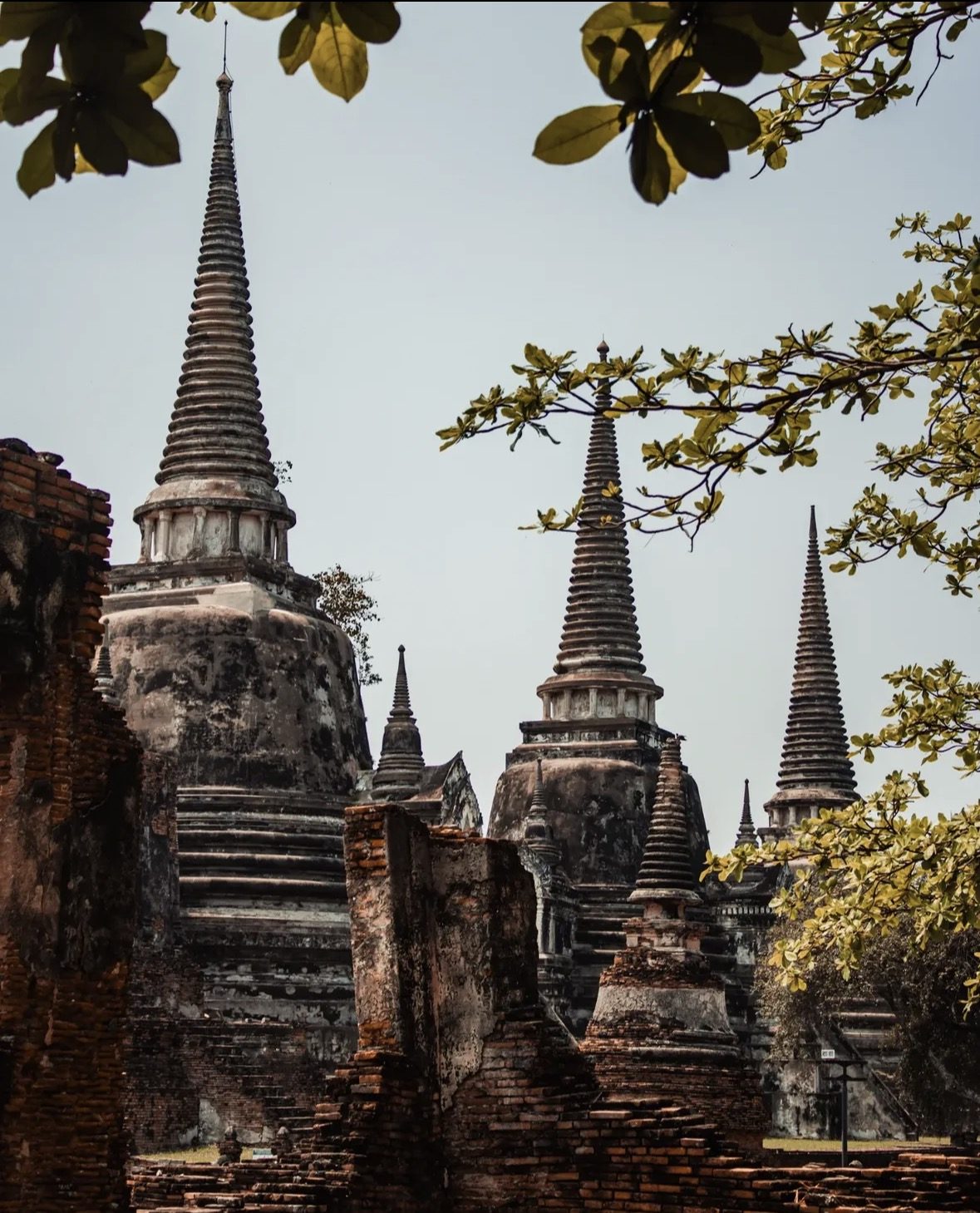
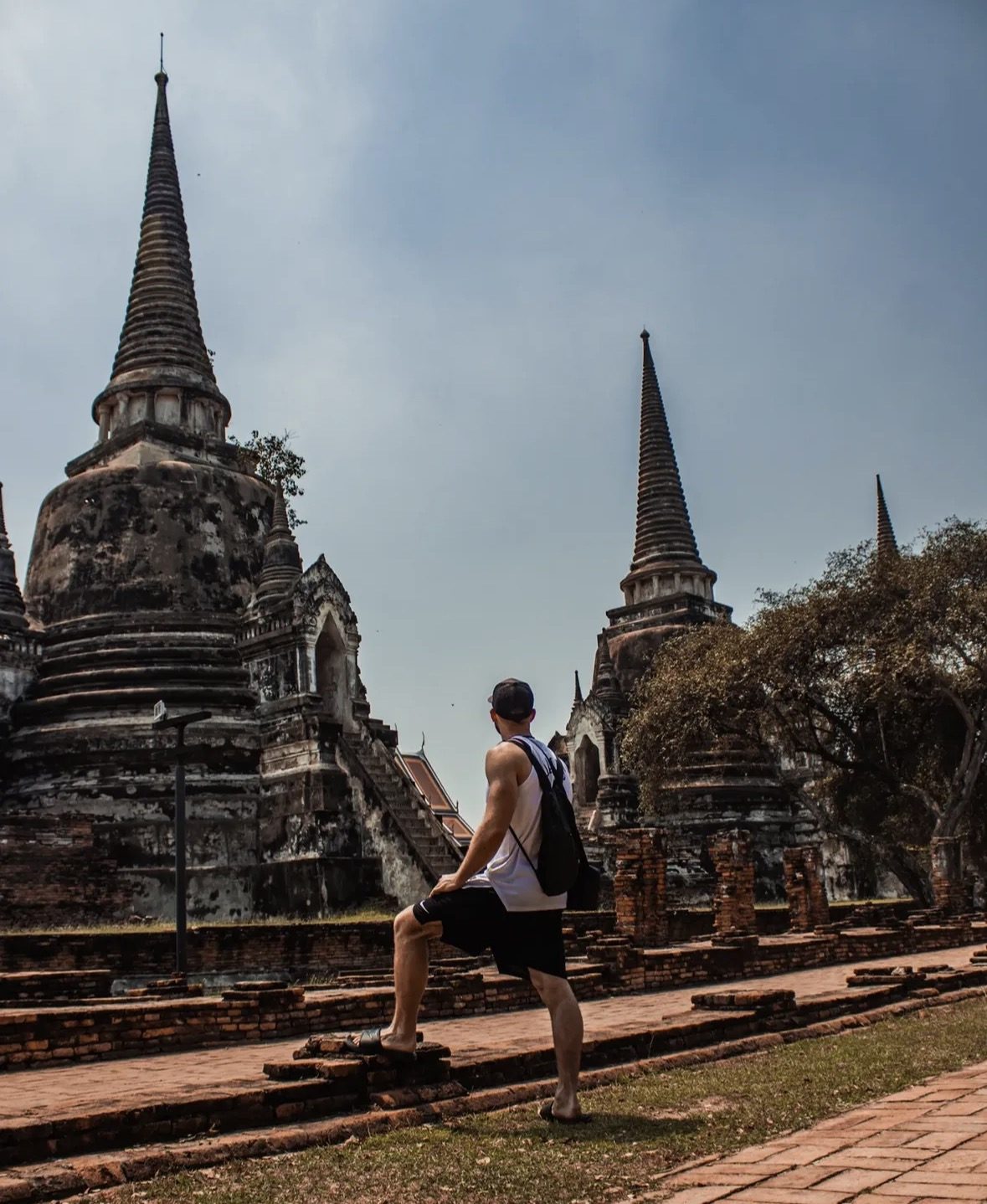
Ayutthayan architecture synthesized Khmer, Sri Lankan, and indigenous Thai traditions into a distinctive visual language. The city was home to more than 400 temples, 3 royal palaces, and numerous monasteries at its zenith. Iconic structures like Wat Mahathat, Wat Ratchaburana, and Wat Phra Si Sanphet defined the skyline with their towering corn-cob shaped prangs and gleaming chedis. The famous Three Chedis of Wat Phra Si Sanphet once housed the ashes of three Ayutthayan kings, while the temple complex originally sheltered a 16-metre-tall gold-plated standing Buddha known as Phra Si Sanphet. The kingdom's artisans also produced exquisite Buddha images, lacquerwork, ceramics, and silk textiles that remain prized by collectors and museums worldwide.
The fall of Ayutthaya in April 1767 stands as one of Southeast Asia's most catastrophic historical events. After a 14-month siege, Burmese forces under King Hsinbyushin breached the city's walls and carried out systematic destruction on an almost unimaginable scale. Temples were looted and burned, gold was stripped from Buddha images, royal archives were destroyed, and tens of thousands of inhabitants were killed or marched into captivity. The city, which had stood for over four centuries, was reduced to smoldering ruins within weeks. So complete was the devastation that the Siamese never rebuilt Ayutthaya; instead, King Taksin established a new capital at Thonburi, and the capital was later moved again to Bangkok in 1782 by the founder of the current Chakri dynasty.
For over a century following its destruction, Ayutthaya's ruins were largely left to be consumed by jungle vegetation and plundered by treasure hunters. Local communities salvaged bricks for new construction, and many irreplaceable artifacts were lost forever. Serious archaeological and restoration work did not begin in earnest until the mid-20th century, when the Thai Fine Arts Department commenced systematic excavations and conservation efforts. These initiatives uncovered extraordinary treasures, including a remarkable underground crypt at Wat Ratchaburana discovered in 1957, which yielded golden royal regalia, votive tablets, and jewelry that are now displayed in the Chao Sam Phraya National Museum adjacent to the park.
In 1991, UNESCO inscribed the Historic City of Ayutthaya as a World Heritage Site, formally recognizing its outstanding universal value as testimony to one of Southeast Asia's greatest civilizations. The designation catalyzed significantly increased investment in conservation, site management, and international scholarly collaboration. Thailand's Fine Arts Department, working alongside UNESCO and international partners, has continued painstaking restoration work on key monuments while carefully balancing preservation with accessibility for visitors. The UNESCO listing also helped curb the illegal antiquities trade that had long plagued the site, providing greater legal protection for the remaining artifacts and architectural fragments still embedded in the landscape.
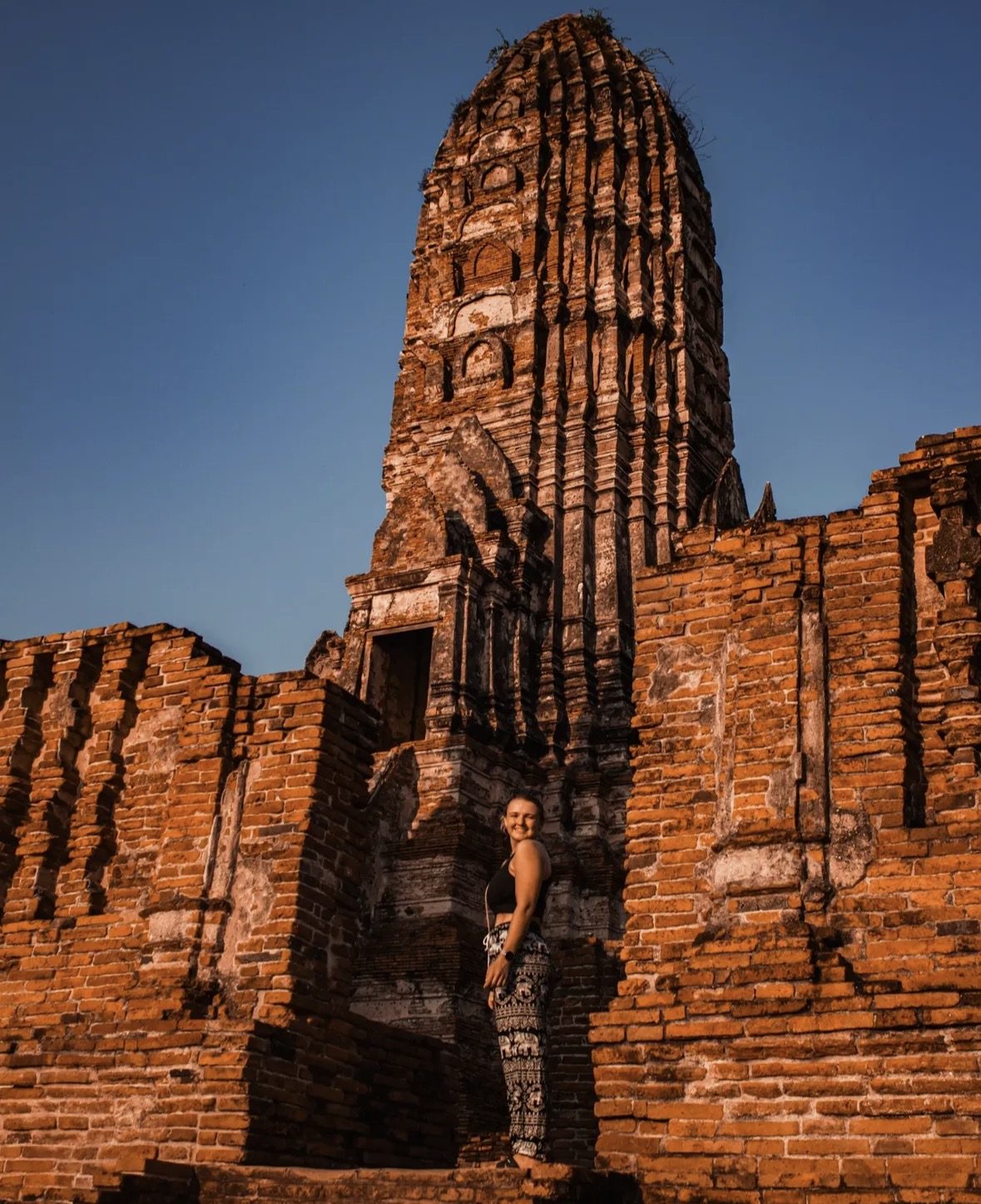
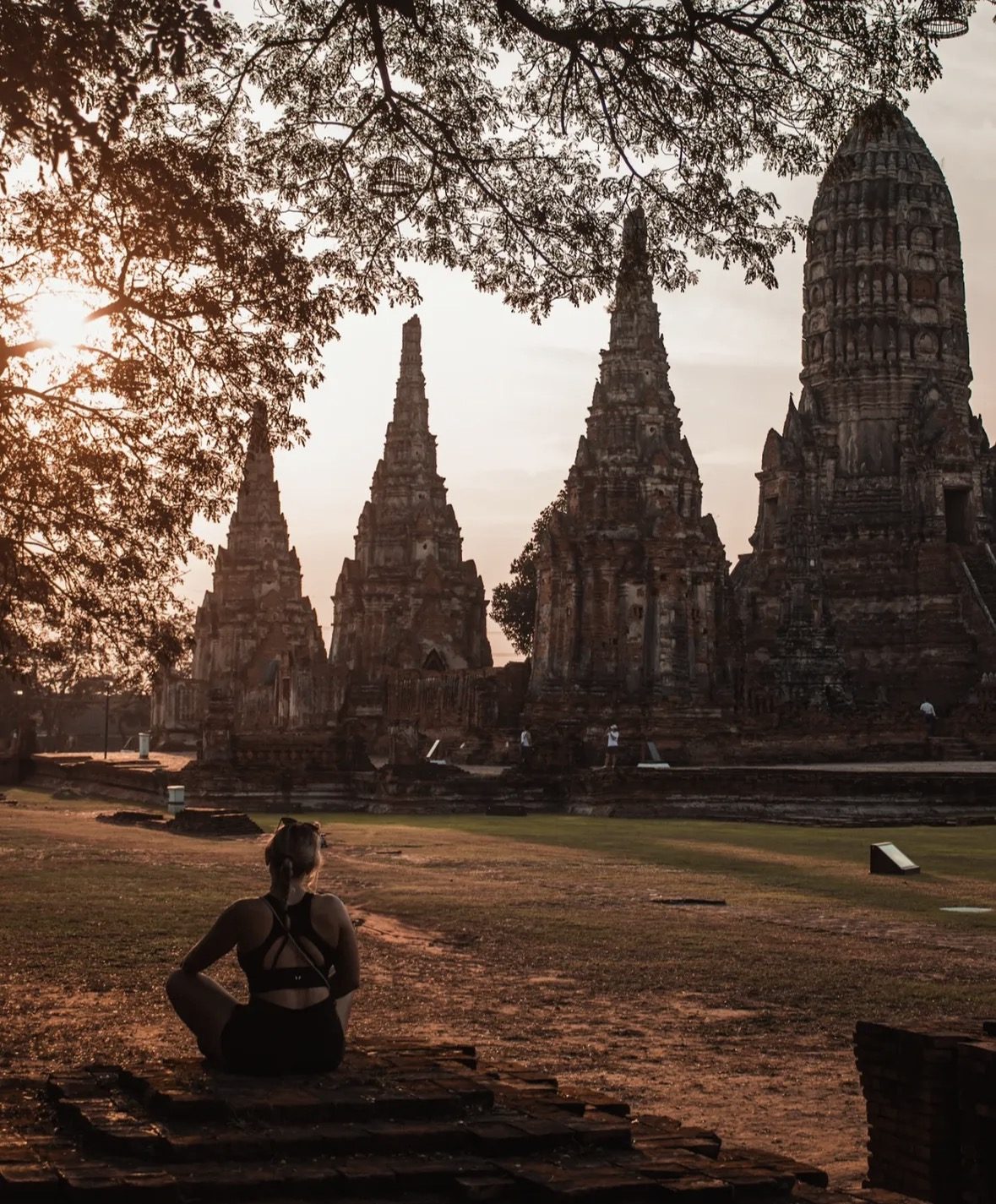
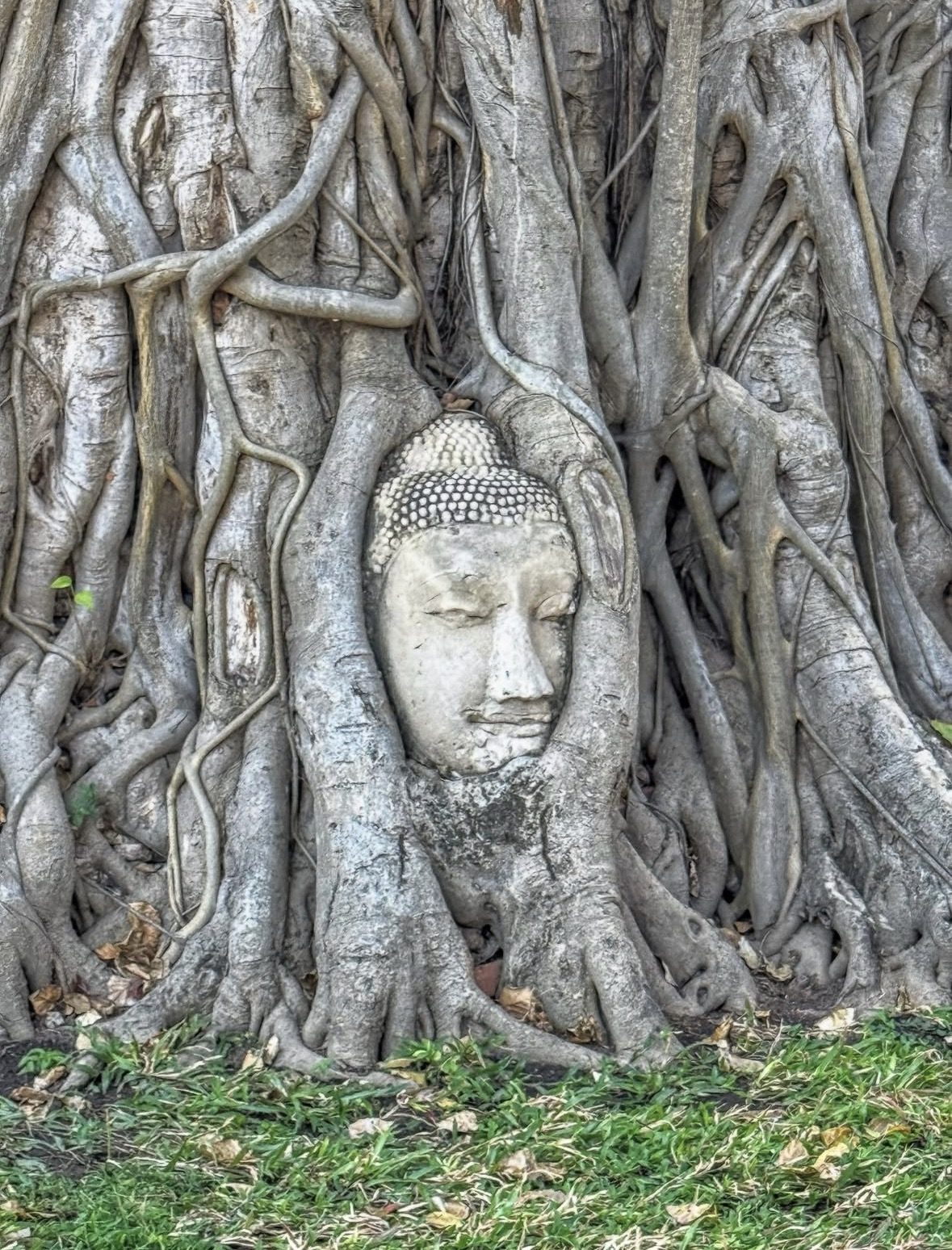
Sprawling across 289 hectares on the island that once housed a glittering imperial capital, Ayutthaya Historical Park today encompasses dozens of temples, palaces, and fortifications in varying states of preservation. Visitors can explore iconic sites such as the enigmatic tree-embedded Buddha head at Wat Mahathat, the soaring prangs of Wat Ratchaburana, and the three royal chedis of Wat Phra Si Sanphet. The park is best explored by bicycle or tuk-tuk, allowing travelers to move between atmospheric ruins at a leisurely pace. Located just 80 kilometers north of Bangkok, the site is easily accessible by train, minibus, or river cruise, making it one of Thailand's most rewarding and manageable day trips or overnight destinations.
Beyond its stone monuments, Ayutthaya pulses with living culture. The annual Ayutthaya World Heritage Fair each December transforms the ruins into a breathtaking backdrop for sound-and-light shows, traditional performances, and cultural exhibitions. The surrounding town offers excellent central Thai cuisine, boutique guesthouses set in atmospheric old buildings, and the fascinating Chao Sam Phraya National Museum. Whether you come as a history enthusiast, a photographer chasing the golden-hour glow on ancient prangs, or a curious traveler seeking to understand the roots of Thai civilization, Ayutthaya delivers an experience of extraordinary depth. Few places in Southeast Asia so powerfully conjure both the magnificence and the fragility of human achievement — and this park deserves a prominent place on every Thailand itinerary.
Ready to Experience It Yourself?
A guided tour of Ayutthaya Historical Park transforms scattered ruins into vivid stories, unlocking secrets that most visitors simply walk past. Expert local guides bring the temples, palaces, and battle sites to life with the context and detail they deserve. Browse our hand-picked Ayutthaya tours below and secure your spot today — this is one Thai experience you will not want to leave to chance.
Book Your Tour Now